
Moving to Italy from the U.S. means filing taxes in two countries. Italy taxes your worldwide income once you live there for most of the year (183 days, 184 in a leap year), and the United States keeps taxing you because it taxes its citizens wherever they live.12 The treaty and both countries' tax credits remove most double taxation, but not all of it: U.S. dividends, some U.S. interest, and U.S. pass-through companies such as S-corps and single-member LLCs can still be taxed twice.3 Under the 7% regime, gains on U.S. stock can also be partly taxed twice, because 7% is below the 10% foreign tax the U.S. requires before it treats the gain as foreign,4 and no credit ever offsets the 3.8% U.S. net investment income tax.5 Below are the sixteen questions Americans ask most, each answered briefly, with links to the full guides.
Most people file in both countries, every year.
– Italy taxes residents on worldwide income, and the United States keeps taxing citizens. Only a few people, usually with very little income, fall below the filing thresholds on either side.12
The treaty prevents most double tax, not all of it.
– Wages, pensions and Social Security usually net out; U.S. dividends and some U.S. interest are where the credits run short.3
Retirement money needs a plan before the move.
– Italy taxes IRA and 401(k) withdrawals as pension income and the U.S. credit usually cancels the double charge. IRA payouts drawn on a regular schedule, including an inherited IRA, have been accepted for the 7% regime; no ruling yet covers a Roth or a one-off lump sum.67
What are Italy's income tax rates?
The national income tax, IRPEF, runs on three bands under the current rules: 23% on income up to €28,000, 33% on the part over €28,000 up to €50,000, and 43% on the part over €50,000.11 Regional surcharges of roughly 1.2% to 3.3% and municipal surcharges of roughly 0.1% to 0.9% come on top. The bands apply to a resident's worldwide income, not only what is earned in Italy.2
Much investment income sits outside the bands and is taxed instead at flat rates. The general rule is 26%, and the rate is 12.5% on interest and gains from government bonds of Italy and other approved (white-list) countries, including U.S. Treasuries.12 The notable exception is foreign funds that are not EU-regulated, which includes U.S. mutual funds and ETFs: their income goes back into the bands at ordinary rates, as the brokerage section below explains.13
For how the bands and surcharges add up on a real return, read what income tax you pay in Italy as an American and the beginner's guide to tax in Italy for foreigners, or run your own figures through JSBC's Italy tax calculator.
How does Italy tax my IRA and 401(k) withdrawals?
Italy taxes IRA and 401(k) withdrawals as pension income, at IRPEF rates of 23% to 43%,11 or at a flat 7% under the southern regime if you qualify.9 Interpello 616/2021 accepted 72(t) SEPP payments from an IRA as pension income,6 and Interpello 229/2024 treated a lump-sum payout from a U.S. pension fund to an Italian-resident heir the same way.14
Both rulings are narrow: 616 covered a disciplined SEPP, not every IRA withdrawal. In October 2026, Risposta 184/2026 went further: an heir drawing regular yearly distributions from an IRA inherited from a parent receives pension income and can use the 7% regime.7
Under the treaty, a traditional IRA or 401(k) falls under Article 18 or 22. Article 18 covers pensions for past work and Article 22 covers other income, and under either one Italy, as the residence country, taxes the withdrawal. The saving clause means U.S. tax still reaches a citizen; the credit usually cancels it.315
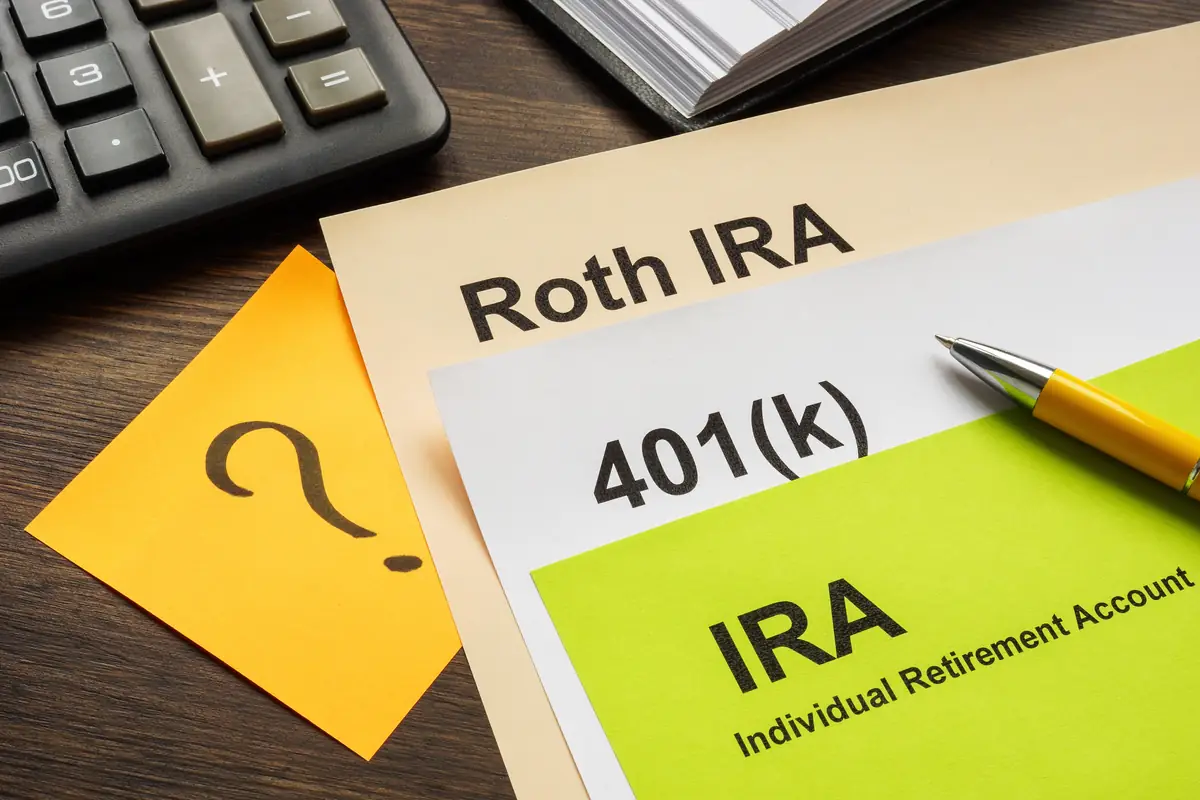
An IRA can qualify you for the 7% regime when it pays out like a pension. Interpello 616/2021 accepted disciplined SEPP payments as pension income for the regime,6 and Risposta 184/2026 accepted regular yearly distributions from an inherited IRA.7 No ruling yet covers a Roth or a one-off lump sum. The same IRA tapped at will, in irregular amounts, looks more like the investment product the Agenzia delle Entrate rejected in Interpello 244/2021. See how the treaty treats pensions and Social Security and your IRA and Italy's 7% regime.
A Roth IRA is the harder case. Once you are resident, Italy will most likely tax the whole Roth payout, contributions included, as pension income, and it is not expected to honor the U.S. tax-free promise. The Agenzia delle Entrate has taxed the gross payout of U.S. retirement accounts as pension income.14 No ruling addresses a Roth specifically, so this is the expected treatment, not settled law.
The two reliable fixes both happen early: draw the account down while U.S. rules still govern it, or settle into the 7% regime so the payout is taxed at 7%. The detail is in how Italy taxes a Roth IRA.
How are my US brokerage account, ETFs and mutual funds taxed once I live in Italy?
U.S. shares and bonds you hold directly are taxed in Italy at a flat 26% on dividends, interest and gains.12 That flat tax gives no credit for U.S. tax, so U.S. dividends, and U.S. interest the United States would also tax a non-citizen on, are taxed twice.3 The second tax is real and is not cancelled.
U.S. mutual funds and ETFs work differently. They are not EU-regulated funds, so Italy taxes their distributions and the gain when you sell at ordinary income tax rates (IRPEF, 23% to 43%), not 26%.13 Because that income is part of your ordinary income, Italy does credit the U.S. tax on it.16 The United States keeps taxing all of it because you are a citizen.3
For interest, the only relief is to choose ordinary rates instead of the flat rate, which often costs more; for dividends that choice does not exist.17 Gains on U.S. shares are the exception: because Italy's tax on the gain is at least 10% of it, U.S. law treats the gain as foreign-source and the U.S. foreign tax credit absorbs Italy's 26%, leaving only the net investment income tax where it applies.124
The usual fix is to avoid pooled funds and hold shares and bonds directly. On paper the best home for them is an Italian broker under the administered regime (regime del risparmio amministrato), which handles the Italian tax for you, nets gains against losses inside the account, and taxes foreign dividends only on what is left after U.S. withholding.18 In practice many Italian banks and brokers will not open investment accounts for U.S. citizens because of the extra U.S. reporting, so most Americans keep their holdings at a U.S. broker and report the income on the Italian return themselves, where the 26% falls on the full dividend before U.S. withholding.18 A European UCITS fund does not solve the problem either: the United States treats it as a passive foreign investment company, with its own punitive regime and an annual Form 8621.19 The other fixes are to hold income assets outside the United States, to realize gains before you become resident, or to use the 7% regime if you qualify. Decide what to hold before the move: see how Americans should invest while living in Italy, how the treaty taxes dividends, interest and capital gains and whether to sell appreciated assets before you move.
Do I need a US accountant, an Italian commercialista, or both?
You need both returns prepared, and prepared by people who read each other's work. A U.S. preparer handles the 1040, the FBAR and the foreign tax credit; an Italian commercialista files the Redditi return, the quadro RW foreign-asset schedule and the regime elections. Each return's credit depends on the tax computed on the other.320
| Task | U.S. preparer | Italian commercialista | Needs both sides |
|---|---|---|---|
| Form 1040 and foreign tax credit | Yes | No | Yes, the credit uses the Italian tax figure20 |
| FBAR and Form 8938 | Yes | No | No |
| Redditi PF return and quadro RW | No | Yes | Yes, the Italian credit uses the U.S. tax figure3 |
| IVIE and IVAFE on U.S. assets | No | Yes | No |
| 7% or impatriati election | No | Yes | Yes, it changes what is left to credit in the U.S.910 |
| Residency start date | No | Yes | Yes, it drives both returns for the year8 |
The failure we see is two competent professionals who never compare numbers. To map both sides before you move, see JSBC's pre-move assessment; if you are already resident, see cross-border tax compliance.
I work remotely for a US employer. Do I pay Italian tax?
Yes. Once you are an Italian resident and the work is physically done in Italy, Italy has the right to tax the salary, whoever pays it.32 The United States taxes the same wages, but you can exclude up to $130,000 for 2025 and $132,900 for 2026 with the foreign earned income exclusion, or credit the Italian tax instead.2120
The digital nomad visa does not change this; it is an immigration status, not a tax regime.2 Some remote workers also qualify for the impatriati reduction,10 and U.S. Social Security coverage can continue under the U.S.–Italy agreement once the U.S. agency certifies it.22 See how the digital nomad visa is taxed and whether you can use the foreign earned income exclusion.
How does the 7% flat tax work, and do I qualify?
It is an optional 7% substitute tax on all foreign-source income for people who receive a pension from a foreign payer and move their tax residence to a qualifying southern town. You must not have been an Italian tax resident in the previous five years, and the regime runs for the year of the move plus nine more.923 Since 7 April 2026 the town limit is 30,000 inhabitants, up from 20,000.2324
The towns are in Sicily, Calabria, Sardinia, Campania, Basilicata, Abruzzo, Molise and Puglia, plus listed earthquake-zone towns in central Italy.9 To see which towns qualify, use the 7% tax map.
On a €40,000 foreign pension, the 7% regime means €2,800 of Italian tax, against about €10,400 at normal rates before deductions and local taxes.911
The 30,000 limit carries into 2027. Italy's new income tax code, Legislative Decree 117/2026, first repeated the old 20,000 figure, and a correcting decree in force from 7 August 2026 changed it back to 30,000.2524 See the 30,000 town limit and 2027 and, to check a town's population, the 7% tax map.
I'm self-employed. Partita IVA, forfettario, and INPS or US Social Security?
Most freelancers open a partita IVA (a VAT number) and look at the forfettario, a flat regime for revenue up to €85,000 that taxes a fixed share of revenue at 15%, or 5% for the first five years of a qualifying new activity.26
Social security is the harder half: under the U.S.–Italy agreement, a U.S. citizen who is not also Italian stays in U.S. Social Security for self-employment and is exempt from INPS, Italy's social security agency, once a certificate of coverage proves it.22
You pay U.S. self-employment tax instead of contributions to INPS, the Italian social security agency. The exemption only takes effect once the U.S. Social Security Administration (SSA) certifies your coverage to Italy, and you request that certificate from SSA yourself.22
Dual U.S.–Italian citizens must choose one system within three months after the month the work begins. If you miss that deadline and pay into both systems, or neither, you stay in the system of the country where the work is done, which for someone working in Italy is INPS.27 See how to get an SSA certificate of coverage and whether Americans working in Italy can keep paying U.S. Social Security.
Does the U.S.–Italy tax treaty stop double taxation?
For most income, yes: the U.S.–Italy tax treaty decides which country taxes each type of income first, the other country gives a credit, and for U.S. citizens resident in Italy the treaty's re-sourcing rule treats U.S.-source income as Italian-source so the U.S. credit can absorb Italy's tax.3 The gap is U.S.-source investment income and income from U.S. pass-through businesses, where the credits on each side are capped.320
Italy's tax office refuses any credit for U.S. tax on income it taxes at its flat 26% rate, such as U.S. dividends.12 Italy's Supreme Court (Corte di Cassazione) has twice ruled that refusal contrary to the U.S.–Italy treaty, in 2022 and 2024.28 Lower courts are split and the tax office has not changed its position, so a refund claim is possible but contested.
Each income type goes to one country first, such as U.S. rent to the United States or a pension to Italy.
That country taxes it under its own law and rates.
Italy credits the U.S. tax the treaty allows, capped at what a non-citizen would owe.
The U.S. return credits the Italian tax left over, on Form 1116.
The third step is article 23(4) of the treaty, and it is why U.S. dividends are exposed: Italy credits only the U.S. tax a non-citizen would owe, and nothing where the income bears a final Italian substitute tax such as the flat 26%.312 See what a dual filing year looks like and how the foreign tax credit works for Americans in Italy.
Going deeper: what the treaty allocates, what the saving clause overrides, and the income types where it leaves an American in Italy exposed are in the U.S.–Italy tax treaty guide.
Should I keep my US LLC or S-corp after the move?
In most cases, no. Italy does not recognize the U.S. pass-through treatment of an S-corporation or a disregarded LLC. The United States taxes the K-1 income to you every year, whether or not it is distributed, while Italy taxes what the company actually pays out.
The treaty does not reconcile the two, and Italy gives no credit for the U.S. tax: it only taxes the payout after subtracting the U.S. tax already paid on that profit, so the double tax is reduced, not removed.329
The mismatch is not a documentation problem or a timing election that careful filing can cure. A U.S. company managed from Italy for most of the year can also be treated as Italian resident, the rule called esterovestizione.30 The right answer is to restructure, in most cases a conversion to a C-Corp, ideally before residency begins.
See whether Americans in Italy should own a U.S. S-corp or LLC, whether a solution to the S-corp problem is on the way and esterovestizione explained.
Is my US Social Security taxed in Italy?
Yes. The treaty says U.S. Social Security paid to a resident of Italy is taxable only in Italy, and Italy taxes it as pension income at ordinary IRPEF rates, or at 7% inside the southern regime.39 For a U.S.-only citizen, the saving clause still lets the United States tax it too, with a credit for the Italian tax.3

The benefit also counts as a foreign pension for the 7% regime.9 See why U.S. Social Security is (almost) always taxable in Italy and how U.S. and Italian Social Security work together.
Does dual citizenship change my US or Italian taxes?
Less than people hope, and in two narrow places more than they expect. Italian citizenship does not make you an Italian tax resident, which depends on where you live, and it does not end U.S. filing, which depends on U.S. citizenship.21
It does matter for U.S. Social Security, which the protocol leaves to Italy alone for a dual national resident there, and for the social security agreement, where a dual national chooses a system.322
It also matters for U.S. government pensions (federal, state, local or military). Article 19 of the treaty taxes these only in the United States, unless you are both resident in Italy and an Italian citizen, in which case Italy taxes them. As a U.S. citizen you are still taxed by the United States too, with a credit for Italy's tax.3
Going deeper: the five tie-breaker tiers, the protocol trap that can leave an American in Italy with no U.S. treaty residence at all, and the saving clause with its short list of carve-outs are in the tie-breaker and saving clause guide.
What is the impatriati regime, and can I use it?
It is a discount on Italian tax for income from work. For five years, the year of the move and the four that follow, it gives a 50% discount on qualifying employment and self-employment income, or 60% with a minor child, on up to €600,000 a year.10 You must not have been resident in Italy for the previous three years, commit to stay for four, work mainly in Italy and hold a high qualification.10
Researchers and university teachers have a separate, larger incentive, under which 90% of qualifying research or teaching income is left out of Italian tax.31 The look-back stretches to six or seven years if you return to work for the same employer or group, and the U.S. return still taxes the full salary.1020 See Italy's impatriate regime and Italy opens the impatriati break to AI experts.
Do I still have to file US taxes after I move? And what if I never did?
Yes. A U.S. citizen abroad reports worldwide income on the same filing thresholds as at home, with an automatic extension to June 15 for those living abroad, and the exclusion and credit only exist if you file to claim them.1 If you have not been filing, the Streamlined Foreign Offshore Procedures let a non-willful filer catch up with three years of returns and six years of FBARs, without penalties.32
The streamlined route needs a certification that the failure was non-willful.32 The FBAR is due when your foreign accounts top $10,000 at any point in the year, and it is filed with FinCEN, not with the tax return.3334 See how to catch up with the streamlined procedures and reporting Italian bank accounts on the FBAR.
What happens to my US home: keep it, rent it, or sell it?
Each choice has a different Italian cost. Keep it and Italy charges IVIE, a wealth tax on foreign property, at 1.06% of the purchase cost each year, less any property tax paid where the home sits. Rent it and both countries tax the rent, with Italy crediting the U.S. tax.
Sell it and the United States taxes the gain, with its home-sale exclusion, while Italy taxes it only if you owned it for five years or less.35363738

On a sale, the United States excludes up to $250,000 of gain, or $500,000 on a joint return, if you owned and lived in the home for two of the five years before the sale.37 Italy exempts a gain on property bought or built more than five years earlier.38 FIRPTA withholding touches only a foreign seller, such as a non-citizen spouse.39
On rent, Italy taxes the net figure measured under U.S. rules.36 On keeping it, Italy lets you deduct from IVIE any wealth or property tax paid in the country where the property sits. U.S. property tax is generally read as qualifying, so it usually reduces IVIE and can cancel it, and IVIE of €200 or less for the year is not due.35 See capital gains tax on selling property, foreign rental income taxed on the net, when IVIE gets expensive and, in Italian, FIRPTA on a U.S. sale by an Italian resident.
When do I become an Italian tax resident? Is it 183 days?
Roughly, but not only. You are resident if, for most of the tax year, you are registered at the anagrafe (the town population register) or have your residence, your domicile (the center of your personal and family relationships) or your physical presence in Italy, counting part days.2 Italy looks at the whole calendar year, so once you qualify you are resident from 1 January.8
For Americans there is no split year. Italy grants split-year relief only through specific treaties, such as those with Germany, Switzerland and Panama, and the U.S. treaty is not one of them.8 Arrive in late spring and settle in, and you can be resident for the whole year, including the months before the flight.
Arrive late in the year and you rarely are: presence, residence, domicile and registration each have to cover most of the year, so a late arrival usually makes the next year your first Italian tax year. The main exception is someone whose family life was already centered in Italy for most of the year, which can put their domicile there.28
The date on the ticket is a tax decision. See when in the year to move and the glide slope.
Going deeper: the three tests, how the 2024 reform changed them, and what the Agenzia delle Entrate actually checks in practice are in the definitive guide to Italian tax residency.
Does Italy have a wealth tax on my U.S. accounts and home?
Yes, Italian residents pay two. IVAFE charges 2 per mille a year (two euros per thousand) on the value of foreign financial investments, and twice that rate for those held in blacklisted jurisdictions; foreign bank accounts pay a fixed annual amount instead.40 IVIE taxes foreign real estate, so a U.S. home you keep is caught too: see how IVIE taxes a U.S. home.35 Both go on the RW section (quadro RW) of the Italian return.
The United States still wants the FBAR on the same accounts, and Form 8938 above higher thresholds.3334 Filing one never satisfies the other.
| Filing | Country | Who files | Threshold or charge |
|---|---|---|---|
| FBAR (FinCEN 114) | United States | U.S. persons with foreign accounts | Over $10,000 in total at any time33 |
| Form 8938, living abroad | United States | Single filers | Over $200,000 at year end or $300,000 at any time34 |
| Form 8938, living abroad | United States | Joint filers | Over $400,000 at year end or $600,000 at any time34 |
| Quadro RW and IVAFE | Italy | Residents with foreign financial assets | 0.2% a year of the value40 |
| IVIE | Italy | Residents with foreign property | 1.06% of value a year, less property tax paid where it sits; not due at €200 or less35 |
For an Italian resident, the U.S. accounts are the foreign ones, and the IVAFE rate rises to 0.4% only for listed preferential-tax jurisdictions, which do not include the United States.40 See whether the Agenzia monitors bank transfers and property and reporting Italian bank accounts on the FBAR.
Frequently asked questions
Does Italy tax me for the whole year I arrive?
If you qualify as resident for that year, yes. Italy assesses residence over the calendar year, so income from before the move is included.8
Is the FBAR filed with my U.S. tax return?
No. It is filed electronically with FinCEN, separately from the 1040, and is due April 15 with an automatic extension to October 15.34
Does the foreign earned income exclusion cover my pension or Social Security?
No. The exclusion covers pay for personal services, such as wages and self-employment income. Pensions, Social Security, interest and dividends rely on the foreign tax credit instead.41
Can I be a tax resident of both countries at once?
Yes, in practice: Italy taxes you as a resident and the United States taxes you as a citizen. The treaty's tie-breaker rarely helps an American who has moved, because Italy treats a U.S. citizen as a U.S. treaty resident only if that person has a substantial presence, permanent home or habitual abode in the United States. The treaty's credit rules resolve the overlap instead.32
Residency, regime choice, retirement income and U.S. filings all depend on your own facts. A consultation looks at where you stand on both sides of the Atlantic and what to do next.
Book a Free Consultation → Cross-Border Planning
The U.S.–Italy Tax Treaty: A Complete Guide for Americans in Italy
How the U.S.–Italy tax treaty works for Americans in Italy: what is double taxed, what is not, Social Security, pensions, IRAs, and the saving clause.
Read article → Cross-Border Planning
When Do You Become an Italian Tax Resident? The Definitive Guide
How Italy's 2024 reform rewrote the residency tests, why the registration date sets your tax year, the regimes, the relocation-agency trap, and the U.S. overlay.
Read article →Sources & Legal References
- Internal Revenue Service, "U.S. Citizens and Resident Aliens Abroad," https://www.irs.gov/individuals/international-taxpayers/us-citizens-and-resident-aliens-abroad ↩
- D.P.R. 22 December 1986 n. 917 (TUIR), article 2, as amended by D.Lgs. 209/2023, https://www.normattiva.it/uri-res/N2Ls?urn:nir:stato:decreto.del.presidente.della.repubblica:1986-12-22;917~art2 ↩
- Convention between the United States of America and the Italian Republic for the Avoidance of Double Taxation with Respect to Taxes on Income, and Protocol, signed 25 August 1999, articles 1, 4, 13, 15, 18, 19, 23 and Protocol article 1, https://home.treasury.gov/system/files/131/Treaty-Italy-8-24-1999.pdf ↩
- 26 U.S.C. § 865 (source rules for personal property sales), subsection (g)(2), https://www.law.cornell.edu/uscode/text/26/865 ↩
- 26 U.S.C. § 1411 (net investment income tax, a chapter 2A tax outside the foreign tax credit of sections 27 and 901); Toulouse v. Commissioner, 157 T.C. 49 (2021), holding that article 23 of the U.S.–Italy treaty gives no credit against it, https://www.law.cornell.edu/uscode/text/26/1411 ↩
- Agenzia delle Entrate, Risposta a interpello n. 616 del 20 settembre 2021 (SEPP payments from an IRA as pension income under article 49, paragraph 2(a) TUIR, for the article 24-ter regime), https://www.agenziaentrate.gov.it/portale/documents/20143/3788714/Risposta+all%27interpello+n.+616+del+20+settembre+2021.pdf ↩
- Agenzia delle Entrate, Risposta a interpello n. 184 del 15 ottobre 2026 (periodic distributions from an inherited U.S. IRA are pension income under article 49, paragraph 2(a) TUIR, opening the article 24-ter regime), https://www.agenziaentrate.gov.it/portale/documents/20143/10360383/Risposta+n.+184_2026.pdf ↩
- Agenzia delle Entrate, Circolare n. 20/E del 4 novembre 2024 (English version), https://www.agenziaentrate.gov.it/portale/documents/20143/6519685/Circolare_20_del_4_11_2024_Eng.pdf ↩
- D.P.R. 917/1986 (TUIR), article 24-ter, https://www.normattiva.it/uri-res/N2Ls?urn:nir:stato:decreto.del.presidente.della.repubblica:1986-12-22;917~art24-ter ↩
- D.Lgs. 27 dicembre 2023 n. 209, article 5 (new impatriate workers regime), https://www.normattiva.it/uri-res/N2Ls?urn:nir:stato:decreto.legislativo:2023-12-27;209~art5 ↩
- D.P.R. 917/1986 (TUIR), article 11, as amended by Law 30 December 2025 n. 199 (Budget Law 2026), article 1, paragraph 3 (IRPEF brackets from 2026: 23% to €28,000, 33% to €50,000, 43% above), https://www.normattiva.it/uri-res/N2Ls?urn:nir:stato:decreto.del.presidente.della.repubblica:1986-12-22;917~art11; https://www.normattiva.it/uri-res/N2Ls?urn:nir:stato:legge:2025-12-30;199~art1 ↩
- D.L. 24 aprile 2014 n. 66, article 3 (26% rate on financial income), https://www.normattiva.it/uri-res/N2Ls?urn:nir:stato:decreto.legge:2014-04-24;66~art3 ↩
- Legge 23 marzo 1983 n. 77, article 10-ter (income from foreign collective investment funds), https://www.normattiva.it/uri-res/N2Ls?urn:nir:stato:legge:1983-03-23;77~art10-ter ↩
- Agenzia delle Entrate, Risposta a interpello n. 229 del 27 novembre 2024 (payout from a U.S. pension fund to an Italian-resident heir taxed as pension income), https://www.agenziaentrate.gov.it/portale/documents/20143/6458344/Risposta+n.+229_2024.pdf ↩
- U.S. Treasury, Technical Explanation of the U.S.–Italy Income Tax Convention, 1999, https://home.treasury.gov/system/files/131/Treaty-Italy-TE-10-22-1999.pdf ↩
- D.P.R. 917/1986 (TUIR), article 165 (credit for foreign taxes), https://www.normattiva.it/uri-res/N2Ls?urn:nir:stato:decreto.del.presidente.della.repubblica:1986-12-22;917~art165 ↩
- D.P.R. 917/1986 (TUIR), article 18, paragraph 1 (option for ordinary taxation of foreign capital income, excluded for dividends), https://www.normattiva.it/uri-res/N2Ls?urn:nir:stato:decreto.del.presidente.della.repubblica:1986-12-22;917~art18 ↩
- D.P.R. 29 settembre 1973 n. 600, article 27, paragraph 4 (Italian withholding on foreign dividends applied net of the foreign withholding), https://www.normattiva.it/uri-res/N2Ls?urn:nir:stato:decreto.del.presidente.della.repubblica:1973-09-29;600~art27; D.Lgs. 21 novembre 1997 n. 461, article 6 (regime del risparmio amministrato), https://www.normattiva.it/uri-res/N2Ls?urn:nir:stato:decreto.legislativo:1997-11-21;461~art6 ↩
- Internal Revenue Service, "About Form 8621, Information Return by a Shareholder of a Passive Foreign Investment Company or Qualified Electing Fund," https://www.irs.gov/forms-pubs/about-form-8621 ↩
- Internal Revenue Service, "Foreign Tax Credit," https://www.irs.gov/individuals/international-taxpayers/foreign-tax-credit ↩
- Internal Revenue Service, "Figuring the Foreign Earned Income Exclusion," https://www.irs.gov/individuals/international-taxpayers/figuring-the-foreign-earned-income-exclusion ↩
- Agreement between the United States of America and the Italian Republic on the Matter of Social Security, article 7, https://www.ssa.gov/international/Agreement_Texts/italy.html ↩
- Agenzia delle Entrate, "Regime opzionale per i pensionati esteri: che cos'è," https://www.agenziaentrate.gov.it/portale/schede/agevolazioni/regime-opzionale-per-i-pensionati-esteri-che-cose-cittadini ↩
- Legge 11 marzo 2026 n. 34, article 26, paragraph 1 (town population limit for the article 24-ter regime raised to 30,000), https://www.normattiva.it/uri-res/N2Ls?urn:nir:stato:legge:2026-03-11;34 ↩
- D.Lgs. 19 giugno 2026 n. 117, Testo unico imposte sui redditi, art. 247 (successor to art. 24-ter TUIR from 1 January 2027), as amended by D.Lgs. 5 agosto 2026 n. 141, art. 2 co. 1 lett. ss) ("20.000 abitanti" replaced by "30.000 abitanti", in force 7 August 2026), https://www.normattiva.it/uri-res/N2Ls?urn:nir:stato:decreto.legislativo:2026-06-19;117~allegato247-doc247 ↩
- Agenzia delle Entrate, "Regime forfetario: le regole," https://www.agenziaentrate.gov.it/portale/regime-forfetario-le-regole-2020-/infogen-regime-forfetario-le-regole-2020- ↩
- Social Security Administration, Program Operations Manual System, RS 02001.070, "Election of Coverage - Italians and Dual Nationals," https://policy.ssa.gov/poms.nsf/lnx/0302001070 ↩
- Corte di Cassazione, sez. V, sentenza n. 25698/2022, https://www.italgiure.giustizia.it/sncass/isapi/hc.dll/sn.solr/sn-collection/select?app.query&q=id:"snciv2022525698S", and sentenza n. 10204/2024, https://www.italgiure.giustizia.it/sncass/isapi/hc.dll/sn.solr/sn-collection/select?app.query&q=id:"snciv2024510204S" (credit for U.S. tax on income subject to Italian substitute tax under the U.S.–Italy treaty) ↩
- Agenzia delle Entrate, Circolare n. 9/E del 5 marzo 2015 (foreign tax credit, art. 165 TUIR), paragraph 5.1 (foreign transparent entities), https://www.agenziaentrate.gov.it/portale/documents/20143/298650/Circolare+9e+del+5+marzo+2015_cir9e+del+5.3.2015.pdf ↩
- D.P.R. 917/1986 (TUIR), article 73, https://www.normattiva.it/uri-res/N2Ls?urn:nir:stato:decreto.del.presidente.della.repubblica:1986-12-22;917~art73 ↩
- D.L. 31 maggio 2010 n. 78, article 44 (incentive for researchers and teachers moving to Italy), https://www.normattiva.it/uri-res/N2Ls?urn:nir:stato:decreto.legge:2010-05-31;78~art44 ↩
- Internal Revenue Service, "U.S. Taxpayers Residing Outside the United States" (Streamlined Foreign Offshore Procedures), https://www.irs.gov/individuals/international-taxpayers/us-taxpayers-residing-outside-the-united-states ↩
- Financial Crimes Enforcement Network, "Report Foreign Bank and Financial Accounts," https://www.fincen.gov/report-foreign-bank-and-financial-accounts ↩
- Internal Revenue Service, "Comparison of Form 8938 and FBAR Requirements," https://www.irs.gov/businesses/comparison-of-form-8938-and-fbar-requirements ↩
- Agenzia delle Entrate, "IVIE: base imponibile e aliquota," https://www.agenziaentrate.gov.it/portale/schede/pagamenti/imposta-sul-valore-degli-immobili-estero-ivie/base-imponibile-e-aliquota-scheda-ivie ↩
- D.P.R. 917/1986 (TUIR), article 70, paragraph 2 (income from property abroad), https://www.normattiva.it/uri-res/N2Ls?urn:nir:stato:decreto.del.presidente.della.repubblica:1986-12-22;917~art70 ↩
- Internal Revenue Service, Topic No. 701, "Sale of Your Home," https://www.irs.gov/taxtopics/tc701 ↩
- D.P.R. 917/1986 (TUIR), article 67, paragraph 1(b), https://www.normattiva.it/uri-res/N2Ls?urn:nir:stato:decreto.del.presidente.della.repubblica:1986-12-22;917~art67 ↩
- Internal Revenue Service, "FIRPTA Withholding," https://www.irs.gov/individuals/international-taxpayers/firpta-withholding ↩
- Agenzia delle Entrate, "IVAFE: base imponibile e aliquote," https://www.agenziaentrate.gov.it/portale/schede/pagamenti/imposta-valore-att-estero-ivafe/base-imponibile-e-aliquote-scheda-ivafe ↩
- Internal Revenue Service, Publication 54, Tax Guide for U.S. Citizens and Resident Aliens Abroad, https://www.irs.gov/publications/p54 ↩